Clinical Advances Allow for Minimally Invasive Care
Neurovascular services make up an important part of Riverside Health’s commitment to neurosciences, ensuring members of our community have access to this highly advanced, minimally invasive care.
What does “neurovascular specialist” mean?
Also known as cerebrovascular, endovascular, neuroendovascular or neurointerventional specialists, these physicians treat conditions affecting the blood vessels of the brain and spinal cord using advanced, minimally invasive techniques.
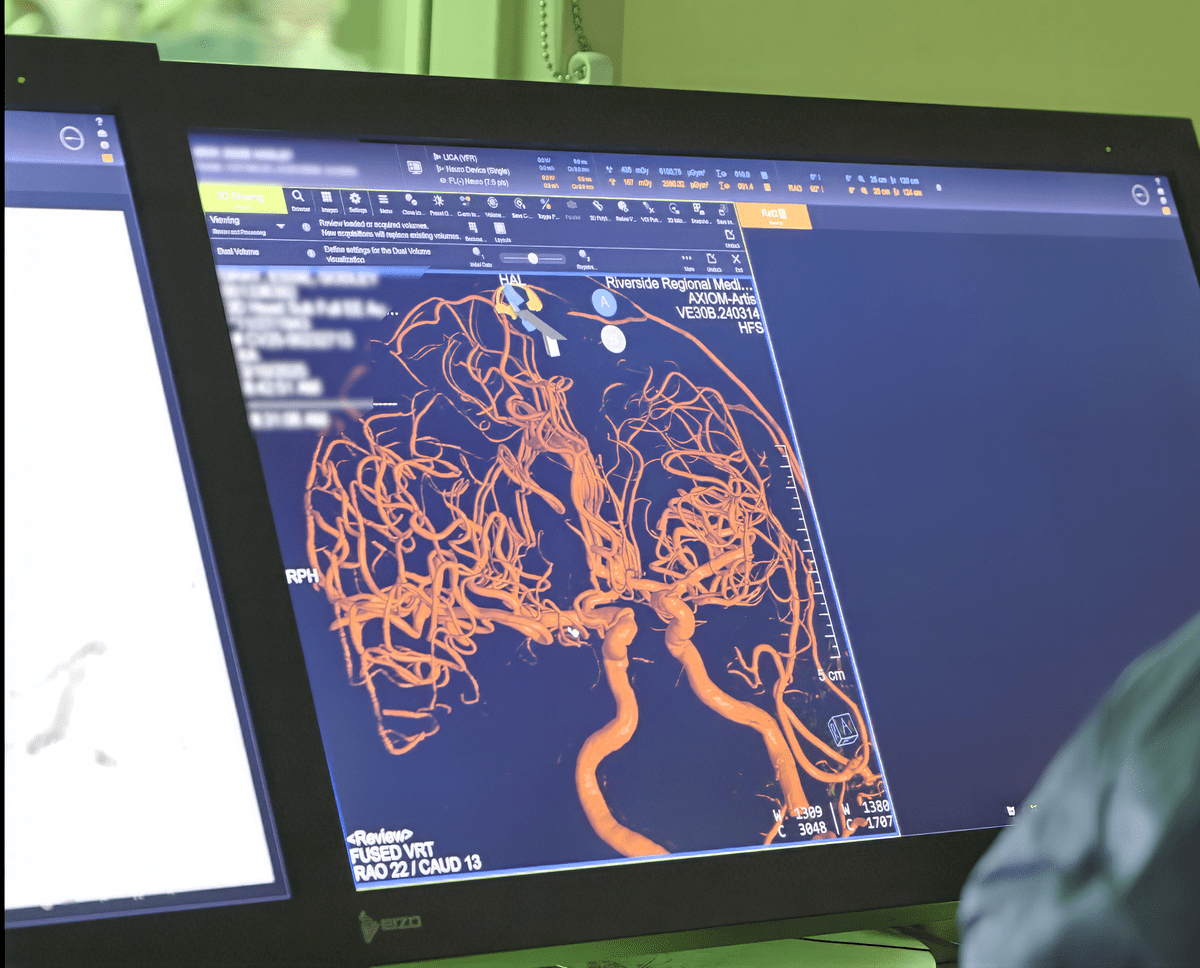
Many people are familiar with cardiac catheterization, a procedure that uses thin catheters and imaging technology to navigate blood vessels and treat blockages in the heart. Cardiologists use angiography, a special type of X-ray, to see blood flow and identify any blockages or leaks. Similarly, neurovascular specialists use this same advanced technology to reach blood vessels in the neck and brain, allowing them to treat clots, aneurysms, ruptures, and other vascular conditions.
Neurovascular Diagnostics
Neurovascular specialists can use this type of technology for diagnosing problems such as cerebral aneurysms and vascular malformations. Information such as size and location can be determined by a diagnostic cerebral angiogram, which will help determine if there is a problem, and if so, what type of treatment is recommended.
Watch the video to go behind the scenes with Dr. Renato Oliveira during a diagnostic cerebral angiogram.
Behind the Scenes of a Diagnostic Cerebral Angiogram
What conditions are treated by a neurovascular specialist?
Neurovascular Specialists may be involved to treat patients with conditions such as:
- Ischemic stroke
- Hemorrhagic stroke
- Chronic Subdural Hematoma
- Cerebral aneurysms
- Vascular malformations
Depending on the type, size and location, different treatments, such as neurovascular procedures, cranial surgery or radiosurgery may be considered, and different specialists may be consulted to ensure the right treatment for each individual case.
What treatment procedures are done by a neurovascular specialist?
Procedures include:
- Mechanical Thrombectomy may be used to treat ischemic stroke
- Aneurysm Procedures are used to stop the blood flow (embolize) to the aneurysm.