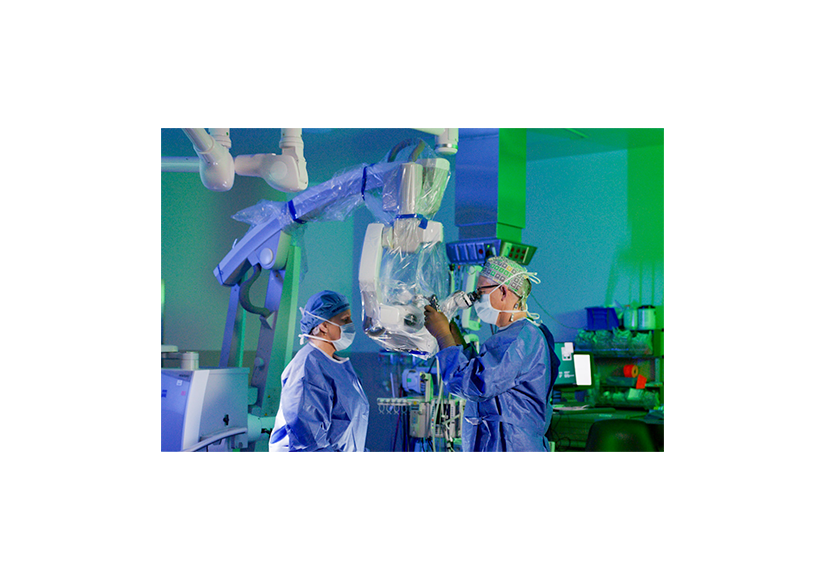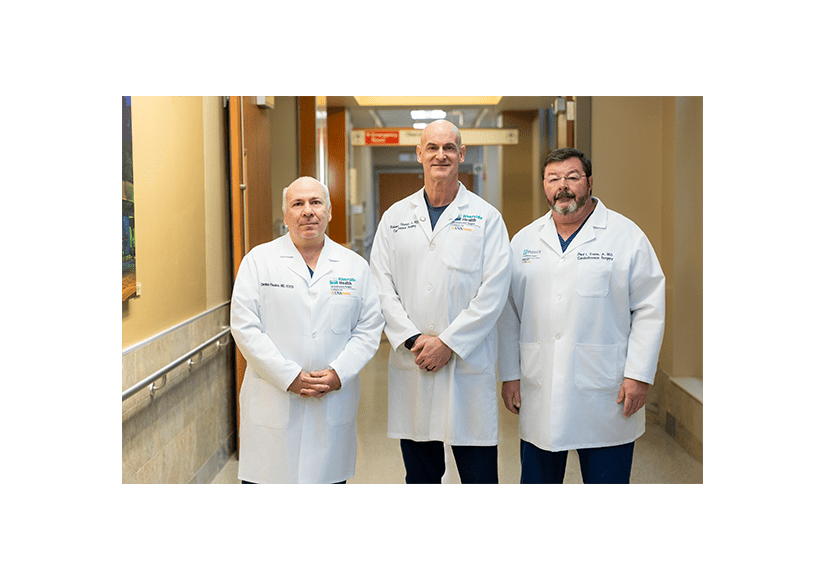
Neurosurgeons at Riverside Regional Medical Center have successfully completed their first Laser Interstitial Thermal Therapy (LITT) procedure, introducing a new minimally invasive treatment option for patients with radiation necrosis and certain brain tumors.
Laser Interstitial Thermal Therapy (LITT) offers a minimally invasive alternative to open brain surgery for treating deep-seated or hard-to-reach brain lesions, including tumors and tissue damaged by radiation therapy. For patients, one of the biggest advantages is that the procedure is far less invasive compared to traditional brain surgery. Instead of a large incision and craniotomy, LITT requires only a small opening in the skull to place a thin laser catheter directly into the affected area. Real-time MRI imaging allows the neurosurgical team to precisely monitor temperature and control treatment while protecting nearby healthy brain tissue.
Following the successful completion of the LITT procedure, Dr. Jackson Salvant, Jr., the attending neurosurgeon with Riverside Hampton Roads Neurosurgical & Spine specialists stated, “This technology allows us to precisely treat abnormal tissue deep within the brain using real-time MRI guidance, often with less risk and a quicker recovery than traditional surgical approaches. Completing our first LITT case represents a significant step forward in the care we provide to patients with complex neurological conditions.”
While LITT can be used to treat certain primary and metastatic brain tumors, Riverside physicians anticipate it will be particularly beneficial for patients experiencing radiation necrosis, a rare but serious complication that can occur months or even years after radiation therapy.
Radiation necrosis occurs when radiation damages healthy brain tissue and blood vessels in the treated area, reducing blood supply and causing tissue breakdown. Symptoms can mimic tumor recurrence and may include headaches, seizures, weakness, or changes in memory or speech.
“Introducing LITT expands our ability to care for patients with complex neurological conditions using some of the most advanced minimally invasive technology available,” said Dr. Mike Oshiki, President of Riverside Regional Medical Center and Riverside Health’s Acute Care Division. “This milestone reflects Riverside’s continued commitment to bringing innovative treatment options to the communities we serve.”
Patients undergoing LITT are typically monitored in the hospital for one to two days following the procedure and often resume normal activities sooner than with traditional open brain surgery.
The successful first case reflects Riverside’s continued commitment to delivering leading-edge technology and specialized expertise in neurological care.
For more information about LITT, please visit riversideonline.com/LITT.