
Understanding & Diagnosing Stroke
What is a Stroke?
A stroke – or brain attack - happens when the blood supply to part of the brain is suddenly cut off. Without oxygen-rich blood, brain cells start to die in just minutes. Strokes are categorized by the cause of the lack of blood supply.
There are 2 main types of stroke:
- Ischemic strokes are caused by a blockage in blood supply to the brain. This can be from a blood clot that has traveled to the brain or by a narrowing or blockage in the artery from plaque or cholesterol. Ischemic strokes are the most common type of brain attack and make up 87% of all strokes.
- Hemorrhagic strokes happen when a blood vessel or aneurysm in the brain ruptures or bursts, causing bleeding into the brain. This can harm brain tissue in two ways: by cutting off the normal blood flow to parts of the brain and by creating pressure from the buildup of leaked blood.
Another condition to know about is a Transient Ischemic Attack (TIA), often called a mini-stroke. A TIA happens when blood flow to the brain is blocked for only a short time. Although the symptoms may completely go away quickly, a TIA is a serious warning sign that a full stroke could happen soon. Always take a TIA seriously and seek medical help right away.
Signs and Symptoms of a Stroke
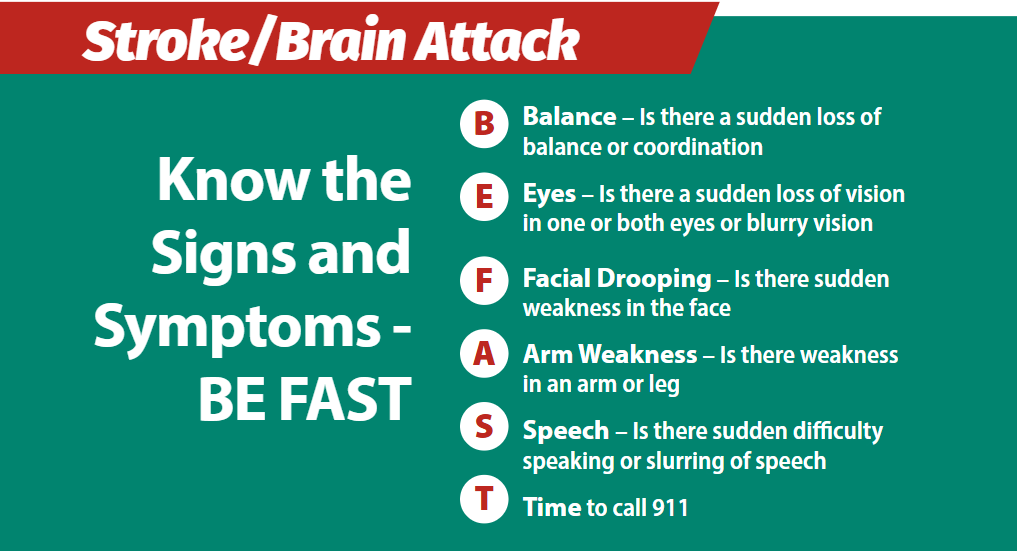
Stroke symptoms often appear suddenly. It’s important to know the signs and act fast. Remember B.E. F.A.S.T.:
Other symptoms can include:
- Sudden numbness or weakness, especially on one side of the body
- Sudden confusion or trouble understanding
- Sudden severe headache with no known cause
- Sudden difficulty speaking or swallowing
- Sudden impaired consciousness, dizziness, discoordination or difficulty with balance
Why Stroke Is a Time-Sensitive Emergency
When it comes to stroke, time is brain. 1.9 million brain cells die every minute a stroke is untreated. The faster a person gets emergency care, the better the chances of saving brain function and reducing long-term disability.
Quick action can mean the difference between:
- Treatments within the time window or limited medical management options
- A full recovery or serious disability
- Independent living or needing full-time care
- Life or death
Arrive Alive, Don’t Drive - Why You Should Always Call 911
If you or someone else shows signs of a stroke, don’t drive to the hospital - call 911 immediately. Emergency medical teams are trained to provide fast, life-saving care:
- Stay focused on care: A driver can be distracted if the patient's condition worsens during the trip.
- Start treatment sooner: Paramedics can begin life-saving care on the way to the hospital.
- Get to the right hospital faster: Ambulances can take you directly to a comprehensive stroke center if advanced treatment is needed.
- Alert the stroke team early: Hospitals prepare in advance so the stroke team is ready to meet you at the CT scanner for immediate diagnosis and treatment.
Every second counts. Calling 911 saves lives.

Diagnosing Stroke
When a stroke happens, every minute counts. The brain loses about 1.9 million brain cells each minute a stroke goes untreated. That’s why rapid diagnosis is critical to improving outcomes and saving lives.
What Happens First
If you arrive at the hospital with stroke symptoms (especially by ambulance) our stroke team is ready. The emergency team will meet you in a specially designated area near the CT scanner for immediate evaluation.
If you arrive by other means, the team will activate the Brain Attack protocol as soon as a stroke is suspected. That is one reason why calling 911 is so important.
During the initial assessment, the team will:
- Ask about your symptoms and determine when you were last seen without symptoms. This "last known well" (or “last known normal”) time is crucial because it affects which treatments you may be eligible for.
- Perform a physical exam to check your vital signs and likely start an IV for quick access to medications if needed.
- Review your medical history and allergies, gathering information from you or a loved one if available.
- Conduct a neurological exam to check your strength, coordination, speech, and vision.
The goal is simple: act fast to limit brain damage and start treatment as soon as possible.
Diagnostic Imaging
After the initial evaluation, you will undergo a CT scan of the brain. A CT scan helps doctors:
- Confirm whether a stroke is happening
- Identify whether the stroke is ischemic (caused by a blockage) or hemorrhagic (caused by bleeding)
- Rule out other conditions that can cause stroke symptoms, such as brain tumors
In some cases, treatment decisions can be made based solely on the CT scan results.
While less frequent, other diagnostic imaging tests that may be used include:
- MRI: Provides a more detailed image of the brain to find smaller strokes or damage
- Carotid ultrasound: Checks for blockages in the arteries that carry blood to the brain
- Echocardiogram: Looks at the heart to find possible sources of clots
- Cerebral angiogram: Provides a detailed view of the brain's blood vessels
Why Fast Imaging Matters
The purpose of diagnostic imaging is to quickly determine the type and location of the stroke. Knowing whether the stroke is caused by a clot or bleeding allows doctors to create the best treatment plan right away, giving patients the best chance to restore blood flow and protect brain function.
At Riverside Health our stroke team is trained and ready to act fast with advanced technology and expert care to support the best possible outcomes.