• Careers
  • About
  • Contact Us
  • Care Estimates
  • Pay My Bill
  • Give Now
  • MyChart Login
  • Schedule Appointment
Riverside Health

Riverside Health

  • Medical Services
    • Diagnostic and Imaging
    • Cancer Care
    • Gastroenterology
    • Heart and Vascular
    • Lifelong Health
    • Mental Health
    • Neurological and Spine Institute
    • Orthopedics
    • Primary Care
    • Urgent Care
    • Women's Health
    • View All Services
  • Conditions & Treatments
  • Locations
  • Find a Doctor
  • Patients & Visitors
    • Accepted Insurance
    • Care Estimates
    • Conflict Resolution
    • Patient Rights
    • Paying for Healthcare Services
    • Recognize a Caregiver
    • Send a Web Wish
    • Volunteer
  • Health Resources
    • Clinical Trials
    • Events
    • Healthy You Blogs
    • Healthy You Podcast
    • Riverside Simulation Training Lab
    • Symptom Checker
  • Careers
  • About
  • Contact Us
  • Care Estimate
  • Pay My Bill
  • Give Now
  • MyChart Login
  • Schedule Appointment
  • News Center
Need Help?

For help in finding a physician, making appointments and general information call Riverside Nurse.

1-800-675-6368
Follow Us Today
  • Twitter
  • Facebook
  • LinkedIn
  • Instagram
  • YouTube
Primary Care
  • Services
    • Chronic Conditions
    • Hospital Care
    • Medical Screening Guidelines
    • Other Riverside Services
  • Choosing a Provider
  • Primary Care Practices
  • Insurance and Medical Costs
  • Conditions & Treatments
  • Home
  • Medical Services
  • Primary Care
  • Conditions & Treatments
  • Antihistamine
  • Icon Label
    • Icon Label
    • Twitter
    • Icon Label
  • Icon Label

Antihistamine

  • Key Points
  • Overview
  • Causes
  • Diagnosis
  • Treatment
  • Side Effects
  • Prevention
  • Next Steps
Key Points

  • Antihistamines are medications used to treat allergy symptoms.
  • They work by blocking histamine, a chemical the body releases during an allergic reaction.
  • Antihistamines may help relieve itching, sneezing, runny nose, watery eyes and hives.
  • Many antihistamines are available over the counter, while some require a prescription.

Schedule an Appointment

Antihistamine Overview

What Are Antihistamines and What Do Antihistamines Treat?

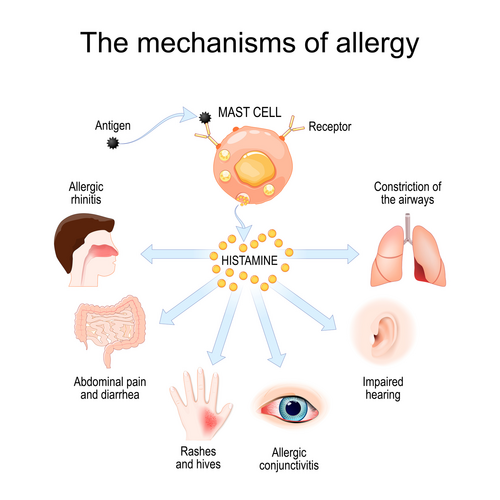
Antihistamines are medications that help control symptoms caused by allergies. When the immune system reacts to allergens like pollen, dust, pet dander or certain foods, the body releases a chemical called histamine. Histamine causes many common allergy symptoms.

Mechanism of allergy. Mast cells and allergic reaction. Histamine. local immune responses. vector illustration

Antihistamines work by blocking histamine receptors in the body. This helps reduce symptoms and improve comfort.

Antihistamine medications are commonly used to treat:

  • Seasonal allergies
  • Allergic rhinitis
  • Hives (urticaria)
  • Allergic skin reactions
  • Itching from allergic reactions or insect bites

For many people, antihistamines provide quick relief from allergy symptoms and help improve daily comfort and sleep.

Back to top

Causes

When is Antihistamine Treatment Needed?

Antihistamines are usually recommended when symptoms are caused by an allergic reaction. Allergies occur when the immune system reacts to substances that are normally harmless.

Common causes of allergies that may require antihistamine treatment include:

  • Pollen from trees, grasses or weeds
  • Dust mites
  • Pet dander
  • Mold spores
  • Certain foods
  • Insect bites or stings
  • Medications that trigger allergic reactions

These allergens can trigger the release of histamine, which causes symptoms such as sneezing, itching, swelling or skin rash.

Antihistamines help control these symptoms and reduce discomfort.

Back to top

Diagnosis

Conditions That May Require Antihistamine Treatment

Before recommending antihistamines, a health care provider will evaluate your symptoms and medical history to determine whether allergies are the cause.

Diagnostic steps may include:

Medical History
Your provider may ask about symptoms such as:

  • Sneezing
  • Runny or congested nose
  • Itchy eyes or throat
  • Skin rash or hives
  • Swelling after exposure to allergens

Understanding when symptoms occur and what triggers them can help identify the cause.

Physical Examination
A provider may examine the nose, throat, skin and eyes to look for signs of an allergic reaction.

Allergy Testing
In some cases, additional tests may help confirm the diagnosis. These may include:

  • Skin prick tests to identify specific allergens
  • Blood tests that measure allergic immune responses
  • Environmental exposure review to identify possible triggers

These evaluations help determine whether antihistamines are the most effective treatment.

Back to top

Treatment

Common Antihistamine Treatment Types and What Conditions They Treat

There are several types of antihistamine medications used to treat allergy symptoms. The best antihistamine for allergies depends on your symptoms, medical history, and how long you need relief. Antihistamines may be taken by mouth, applied to the skin, or used in other forms to help control allergic reactions.

Oral Antihistamines
Oral antihistamines are one of the most common allergy medications. These medicines are taken as tablets, capsules or liquids and help relieve symptoms caused by allergic reactions.

Oral antihistamines are often used for:

  • Seasonal allergies (hay fever)
  • Sneezing and runny nose
  • Itchy or watery eyes
  • Antihistamine for hives
  • Antihistamine for itching caused by allergies

Many oral antihistamines provide relief that lasts most of the day, which makes them a convenient option for people with ongoing allergy symptoms.

Fast-Acting Antihistamines for Allergic Reactions
Some antihistamines work quickly to relieve sudden symptoms caused by an allergic reaction. These may be helpful for short-term relief of symptoms such as:

  • Hives
  • Itching
  • Swelling from mild allergic reactions
  • Skin irritation from insect bites

Fast-acting antihistamines may be used occasionally when symptoms appear suddenly.

Topical Antihistamines
Topical antihistamines are applied directly to the skin as creams or gels. They may help relieve itching, redness and irritation caused by:
• Insect bites
• Mild allergic skin reactions
• Rashes
• Contact with irritating substances

These treatments are often used as an antihistamine for itching or localized allergic reactions.

Combination Allergy Treatments
Sometimes antihistamines are used along with other allergy treatments like decongestants, to improve symptom control. A healthcare provider may recommend combining antihistamines with treatments such as:

  • Nasal sprays
  • Decongestants
  • Allergy avoidance strategies

Using the right combination of treatments can help reduce symptoms and improve daily comfort for people with ongoing allergies.

Your health care provider can help determine the best antihistamine treatment for your symptoms, lifestyle and overall health.

Connect with a Primary Care provider
Back to top

Side Effects

Possible Side Effects of Antihistamines

Most antihistamines are safe when used as directed, but some people may experience side effects.

Common antihistamine side effects may include:

  • Drowsiness
  • Dry mouth
  • Dizziness
  • Headache
  • Mild stomach discomfort

If you experience severe symptoms or an allergic reaction to medication, contact your health care provider right away.

Back to top

Prevention

How to Prevent Allergic Reactions

While antihistamines can help relieve symptoms, preventing exposure to allergens may reduce the need for medication.

Helpful prevention strategies include:

  • Monitoring pollen levels during allergy season
  • Keeping windows closed during high pollen days
  • Using air filters or air purifiers in your home
  • Washing bedding regularly to reduce dust mites
  • Limiting exposure to pet dander if you have pet allergies
  • Avoiding known food allergens

These steps can help reduce allergic reactions and improve overall symptom control.

Back to top
Next Steps

At Riverside Health, we're dedicated to compassionate, collaborative care. We provide a wide range of services, from childbirth to end-of-life care, delivering over 2 million services each year. Our integrated network allows us to support you seamlessly through health, illness, recovery, and wellness. With top clinicians and advanced technology, we’re here for you at convenient locations close to home and work. Visit riversideonline.com.

If you’re wondering where the best place is to get care, please see our guide below:

If your problem is life- or limb-threatening, call 911 or go to the emergency room.

Primary Care – Schedule through MyChart or call your provider’s office who you go to for most health care needs.

Virtual Clinic – Schedule through MyChart or click Here to learn more about Primary Care On Demand.

MD Express Urgent Care – Click Here to find a location near you for after-hours care or when your primary care provider is not available. Open 9am-9pm, Mon-Sun.

Sports Medicine Hotline – Call 757-534-6767, 7am-10pm, 7 days a week to schedule an appointment with a sports medicine specialist. Same day/next day availability in most cases.

If you’re not sure, call Riverside Nurse 24/7 at 1-800-675-6368

Back to top

Riverside Health

Our mission to care for others as we would care for those we love drives us to support a number of health, education and community programs.

  • Twitter
  • Facebook
  • LinkedIn
  • Instagram
  • YouTube
  • News Center
  • Nursing Recruitment & Resources
  • Price Transparency
  • Provider Recruitment & Engagement
  • Riverside Foundation

Need Help?

For help in finding a physician, making appointments and general information call Riverside Nurse.

1-800-675-6368
  • Privacy Policy
  • Non-Discrimination Policy
  • Web Privacy Policy
©2025 - Riverside Health | All right reserved
Schedule Appointment Symptom Checker Contact Us