
• Careers
  • About
  • Contact Us
  • Care Estimates
  • Pay My Bill
  • Give Now
  • MyChart Login
  • Schedule Appointment
Riverside Health

Riverside Health

  • Medical Services
    • Cancer Care
    • Diagnostic Imaging
    • Gastroenterology
    • Heart and Vascular
    • Lifelong Health
    • Mental Health
    • Neurological and Spine Institute
    • Orthopedics
    • Primary Care
    • Urgent Care
    • Women's Health
    • View All Services
  • Conditions & Treatments
  • Locations
  • Find a Doctor
  • Patients & Visitors
    • Accepted Insurance
    • Care Estimates
    • Conflict Resolution
    • Patient Rights
    • Paying for Healthcare Services
    • Recognize a Caregiver
    • Send a Web Wish
    • Volunteer
  • Health Resources
    • Clinical Trials
    • Events
    • Healthy You Blogs
    • Healthy You Podcast
    • Riverside Simulation Training Lab
    • Symptom Checker
  • Careers
  • About
  • Contact Us
  • Care Estimate
  • Pay My Bill
  • Give Now
  • MyChart Login
  • Schedule Appointment
  • News Center
Need Help?

For help in finding a physician, making appointments and general information call Riverside Nurse.

1-800-675-6368
Follow Us Today
  • Twitter
  • Facebook
  • LinkedIn
  • Instagram
  • YouTube
Primary Care
  • Services
    • Chronic Conditions
    • Hospital Care
    • Medical Screening Guidelines
    • Other Riverside Services
  • Choosing a Provider
  • Primary Care Practices
  • Insurance and Medical Costs
  • Conditions & Treatments
  • Home
  • Medical Services
  • Primary Care
  • Conditions & Treatments
  • Anaphylaxis
  • Icon Label
    • Icon Label
    • Twitter
    • Icon Label
  • Icon Label

Anaphylaxis

  • Key Points
  • Overview
  • Causes
  • Symptoms
  • Diagnosis
  • Treatment
  • Prevention
  • Next Steps

Key Points

  • Anaphylaxis is a severe allergic reaction that can develop quickly and needs urgent medical care.
  • Common triggers include foods, insect stings, medications and latex.
  • Symptoms can develop quickly and may include hives, swelling, breathing difficulty or a drop in blood pressure.
  • Prompt treatment with epinephrine is essential and can save lives.
  • Prevention focuses on avoiding known allergens and preparing an emergency action plan.

Overview

What Is Anaphylaxis?

Anaphylaxis


Anaphylaxis is a severe and rapid allergic reaction that can affect multiple parts of the body. It occurs when the immune system overreacts to a substance that is normally harmless, such as a certain food, medication or insect sting.
​
This reaction releases chemicals like histamine throughout the body, leading to symptoms such as swelling, breathing problems and a dangerous drop in blood pressure. Without quick treatment, anaphylaxis can become life-threatening within minutes.
​
Fortunately, with awareness, prompt medical care and proper prevention, most people who experience anaphylaxis can recover fully and prevent future episodes.

Back to top

Causes

What Causes Anaphylaxis?

Anaphylaxis occurs when the immune system mistakenly identifies an allergen as a threat and releases chemicals that cause widespread inflammation and narrowing of the airways.

Common Triggers Include:

  • Foods: Peanuts, tree nuts, shellfish, fish, milk, eggs and soy are leading causes.
  • Medications: Antibiotics (like penicillin), aspirin and certain pain relievers or anesthesia agents.
  • Insect stings or bites: Bees, wasps, hornets and fire ants can trigger reactions in sensitive individuals.
  • Latex: Found in gloves, balloons and some medical equipment.
  • Exercise or combined triggers: Rarely, anaphylaxis can occur during exercise, sometimes worsened by certain foods or medications.
    ​

Even small amounts of an allergen can cause severe reactions in sensitive people, making prevention and preparedness critical.


Back to top

Symptoms

Signs and Symptoms of Anaphylaxis

Anaphylaxis symptoms usually appear within minutes of exposure but can sometimes take up to an hour. They often affect more than one body system.
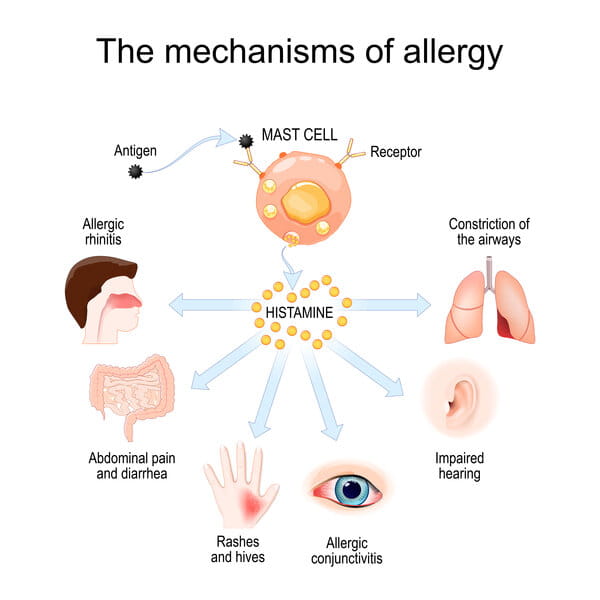
Aanaphylaxis signs and symptoms

Early Symptoms May Include:

  • Itchy skin, hives or redness
  • Swelling of the lips, tongue or throat
  • Tightness in the chest or difficulty breathing
  • Dizziness or fainting
  • Rapid heartbeat or feeling of doom


Severe Symptoms May Include:

  • Wheezing or trouble breathing
  • Sudden drop in blood pressure, indicating shock
  • Nausea, vomiting or abdominal cramps
  • Loss of consciousness

Because symptoms can worsen quickly, immediate emergency care is essential.

Back to top

Diagnosis

How Is Anaphylaxis Diagnosed?

Diagnosis is based on symptoms, medical history and the timing of the reaction.

A health care provider may:

  • Review your allergy history, including foods, medications or exposures before the episode.
  • Conduct allergy testing, such as skin prick or blood tests, to identify triggers.
  • Monitor heart and lung function during or after treatment.


Since anaphylaxis is a medical emergency, diagnosis is often made in the moment, followed by a detailed allergy evaluation later to help prevent future reactions.


Back to top

Treatment

Treatment: How to Treat Anaphylaxis

Emergency Treatment

  • Epinephrine (adrenaline): The first and most important treatment. It quickly reverses symptoms by opening airways and raising blood pressure. People at risk should always carry an epinephrine auto-injector (like EpiPen® or Auvi-Q®).
  • Call 911 immediately: Even if symptoms improve after epinephrine, medical supervision is needed, as reactions can return.
  • Additional care: Emergency personnel may give oxygen, intravenous fluids or medications like antihistamines or corticosteroids to reduce inflammation.


Ongoing Management

  • Allergy testing: To confirm what caused the reaction.
  • Prescription refills: Always keep two epinephrine auto-injectors available.
  • Allergy action plan: Work with your provider to develop a written plan for emergencies.
  • Education: Inform family, friends, schools and workplaces about your allergies and how to use epinephrine.


Back to top

Prevention

How to Reduce the Risk of Anaphylaxis

Avoiding known allergens and preparing for emergencies are key to preventing anaphylaxis.

Helpful Prevention Tips:

  • Read food and medication labels carefully.
  • Inform restaurants and health care providers about your allergies.
  • Carry medical identification, such as a bracelet, noting your allergy and epinephrine use.
  • Keep epinephrine auto-injectors accessible at all times and check expiration dates regularly.
  • Follow up with an allergist for long-term management and possible desensitization therapy.

Back to top

Next Steps

If you or your child have experienced a severe allergic reaction, your primary care provider is instrumental in evaluating your condition and connecting you with an allergist who can identify triggers and create a personalized emergency plan. Early recognition and preparation can make all the difference.

At Riverside Health, we're dedicated to compassionate, collaborative care. We provide a wide range of services, from childbirth to end-of-life care, delivering over 2 million services each year. Our integrated network allows us to support you seamlessly through health, illness, recovery, and wellness. With top clinicians and advanced technology, we’re here for you at convenient locations close to home and work. Visit riversideonline.com.

If you’re wondering where the best place is to get care, please see our guide below:

If your problem is life- or limb-threatening, call 911 or go to the emergency room.

Primary Care – Schedule through MyChart or call your provider’s office who you go to for most health care needs.

Virtual Clinic – Schedule through MyChart or click Here to learn more about Primary Care On Demand.

MD Express Urgent Care – Click Here to find a location near you for after-hours care or when your primary care provider is not available. Open 9am-9pm, Mon-Sun.

Sports Medicine Hotline – Call 757-534-6767, 7am-10pm, 7 days a week to schedule an appointment with a sports medicine specialist. Same day/next day availability in most cases.

If you’re not sure, call Riverside Nurse 24/7 at 1-800-675-6368.

Back to top

Riverside Health

Our mission to care for others as we would care for those we love drives us to support a number of health, education and community programs.

  • Twitter
  • Facebook
  • LinkedIn
  • Instagram
  • YouTube
  • News Center
  • Nursing Recruitment & Resources
  • Price Transparency
  • Provider Recruitment & Engagement
  • Riverside Foundation

Need Help?

For help in finding a physician, making appointments and general information call Riverside Nurse.

1-800-675-6368
  • Privacy Policy
  • Non-Discrimination Policy
  • Web Privacy Policy
©2025 - Riverside Health | All right reserved
Schedule Appointment Symptom Checker Contact Us