• Careers
  • About
  • Contact Us
  • Care Estimates
  • Pay My Bill
  • Give Now
  • MyChart Login
  • Schedule Appointment
Riverside Health

Riverside Health

  • Medical Services
    • Cancer Care
    • Diagnostic Imaging
    • Gastroenterology
    • Heart and Vascular
    • Lifelong Health
    • Mental Health
    • Neurological and Spine Institute
    • Orthopedics
    • Primary Care
    • Urgent Care
    • Women's Health
    • View All Services
  • Conditions & Treatments
  • Locations
  • Find a Doctor
  • Patients & Visitors
    • Accepted Insurance
    • Care Estimates
    • Conflict Resolution
    • Patient Rights
    • Paying for Healthcare Services
    • Recognize a Caregiver
    • Send a Web Wish
    • Volunteer
  • Health Resources
    • Clinical Trials
    • Events
    • Healthy You Blogs
    • Healthy You Podcast
    • Riverside Simulation Training Lab
    • Symptom Checker
  • Careers
  • About
  • Contact Us
  • Care Estimate
  • Pay My Bill
  • Give Now
  • MyChart Login
  • Schedule Appointment
  • News Center
Need Help?

For help in finding a physician, making appointments and general information call Riverside Nurse.

1-800-675-6368
Follow Us Today
  • Twitter
  • Facebook
  • LinkedIn
  • Instagram
  • YouTube
Primary Care
  • Services
    • Chronic Conditions
    • Hospital Care
    • Medical Screening Guidelines
    • Other Riverside Services
  • Choosing a Provider
  • Primary Care Practices
  • Insurance and Medical Costs
  • Conditions & Treatments
  • Home
  • Medical Services
  • Primary Care
  • Conditions & Treatments
  • Psoriasis
  • Icon Label
    • Icon Label
    • Twitter
    • Icon Label
  • Icon Label

Psoriasis

  • Key Points
  • Overview
  • Causes
  • Symptoms
  • Diagnosis
  • Treatment
  • Prevention
  • Next Steps
Key Points

  • Psoriasis is a chronic autoimmune skin condition that causes skin cells to build up too quickly.
  • It often appears as red, raised patches covered with silvery-white scales.
  • Psoriasis is not contagious and cannot be spread through physical contact.
  • Symptoms may flare and improve over time, often triggered by stress, illness or environmental factors.
  • Treatment focuses on reducing inflammation, slowing skin cell growth and relieving symptoms.

Overview

What Is Psoriasis?

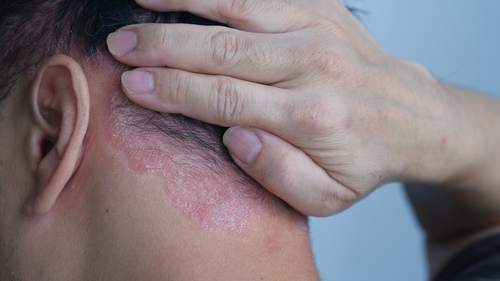
Psoriasis is a chronic skin condition that causes skin cells to develop and build up faster than normal. In people with psoriasis, the immune system becomes overactive, signaling the body to produce new skin cells faster than normal. Instead of shedding naturally, these extra cells build up on the surface of the skin, forming thick, scaly patches.

Psoriasis can affect people of all ages and skin tones. While it most commonly appears on the elbows, knees, scalp and lower back, it can occur anywhere on the body. Although there is no cure, many people manage psoriasis successfully with medical treatment and lifestyle adjustments.

Psoriasis on the nape of a man. skin with psoriasis.

Back to top

Causes

What Causes Psoriasis?

Psoriasis is caused by a problem with the immune system that leads to ongoing skin inflammation.

Contributing Factors Include:

  • Immune system dysfunction: The immune system mistakenly attacks healthy skin cells, speeding up skin cell production.
  • Genetics: Psoriasis often runs in families, increasing risk if a close relative is affected.
  • Environmental triggers: Certain factors can trigger flare-ups in people who are predisposed to psoriasis.

Common triggers may include:

  • Stress
  • Infections such as strep throat
  • Skin injuries, including cuts or sunburn
  • Cold or dry weather
  • Smoking or heavy alcohol use

Psoriasis is not caused by an infection and cannot be passed from person to person.


Back to top

Symptoms

Signs and Symptoms of Psoriasis

Psoriasis symptoms vary depending on the type and severity of the condition.

Common symptoms include:

  • Red patches of skin covered with thick, silvery scales
  • Dry, cracked skin that may bleed
  • Itching, burning or soreness
  • Thickened or pitted nails
  • Stiff or swollen joints in some people (psoriatic arthritis)

Symptoms often cycle through periods of flare-ups followed by times when the skin improves.

Back to top

Diagnosis

How Is Psoriasis Diagnosed?

A health care provider can usually diagnose psoriasis by examining the skin and reviewing medical history.

Diagnostic Steps May Include:

  • Physical exam: Evaluation of the skin, scalp and nails
  • Medical history: Discussion of symptoms, family history and potential triggers
  • Skin biopsy: A small sample of skin may be taken in unclear cases to confirm the diagnosis

Early diagnosis helps guide treatment and reduce the risk of complications.

Back to top

Treatment

How Is Psoriasis Treated?

Psoriasis treatment is personalized and depends on symptom severity, affected areas and overall health.

Topical Treatments
Often used for mild to moderate psoriasis, these may include:

  • Corticosteroid creams or ointments
  • Vitamin D-based treatments
  •  Medicated shampoos for scalp psoriasis

Systemic and Advanced Therapies
For moderate to severe psoriasis, treatment may include:

  • Oral or injectable medications that target the immune system
  • Biologic therapies designed to reduce inflammation
  • Light therapy (phototherapy) under medical supervision

At-Home Care
Daily skin care can help manage symptoms:

  • Moisturizing regularly to reduce dryness and scaling
  • Avoiding known triggers when possible
  • Managing stress through healthy coping strategies

Back to top

Prevention

Can Psoriasis Be Prevented?

Psoriasis cannot be completely prevented, but flare-ups may be reduced by managing triggers and following a treatment plan.

Helpful strategies include:

  • Keeping skin well moisturized
  • Avoiding smoking and limiting alcohol use
  • Treating infections promptly
  • Following prescribed medications consistently

Working closely with a health care provider can help keep symptoms under control.


Back to top
Next Steps

Living With Psoriasis

Living with psoriasis can be physically and emotionally challenging, but support and effective treatment are available. Many people find that a combination of medical care, lifestyle changes and education allows them to manage symptoms and maintain a good quality of life.

If you have ongoing skin symptoms or concerns about psoriasis, a health care provider can help develop a treatment plan tailored to your needs.

If you have concerns about symptoms, testing or treatment options, a health care provider can help guide you through next steps and connect you with the care you need.

At Riverside Health, we're dedicated to compassionate, collaborative care. We provide a wide range of services, from childbirth to end-of-life care, delivering over 2 million services each year. Our integrated network allows us to support you seamlessly through health, illness, recovery, and wellness. With top clinicians and advanced technology, we’re here for you at convenient locations close to home and work. Visit riversideonline.com.

If you’re wondering where the best place is to get care, please see our guide below:

If your problem is life- or limb-threatening, call 911 or go to the emergency room.

Primary Care – Schedule through MyChart or call your provider’s office who you go to for most health care needs.

Virtual Clinic – Schedule through MyChart or click Here to learn more about Primary Care On Demand.

MD Express Urgent Care – Click Here to find a location near you for after-hours care or when your primary care provider is not available. Open 9am-9pm, Mon-Sun.

Sports Medicine Hotline – Call 757-534-6767, 7am-10pm, 7 days a week to schedule an appointment with a sports medicine specialist. Same day/next day availability in most cases.

If you’re not sure, call Riverside Nurse 24/7 at 1-800-675-6368

Back to top

Riverside Health

Our mission to care for others as we would care for those we love drives us to support a number of health, education and community programs.

  • Twitter
  • Facebook
  • LinkedIn
  • Instagram
  • YouTube
  • News Center
  • Nursing Recruitment & Resources
  • Price Transparency
  • Provider Recruitment & Engagement
  • Riverside Foundation

Need Help?

For help in finding a physician, making appointments and general information call Riverside Nurse.

1-800-675-6368
  • Privacy Policy
  • Non-Discrimination Policy
  • Web Privacy Policy
©2025 - Riverside Health | All right reserved
Schedule Appointment Symptom Checker Contact Us