
Nutrition During Pregnancy & Postpartum
Your nutritional needs during and after pregnancy change. During pregnancy, the focus is on fueling your baby’s healthy growth and protecting your health. During the postpartum period, especially if you are breastfeeding, your body needs even more energy and nutrients to support healing and recovery while also supporting milk production.
No matter whether it is before, during or after pregnancy, the focus should be on quality, healthy foods that are full of nutrients, vitamins, minerals, protein and fiber.
Nutrition During Pregnancy
Good nutrition during pregnancy helps your baby grow while keeping you healthy and strong. Your body needs extra vitamins, minerals and balanced meals to support a healthy pregnancy. Eating right can help lower the risk of complications like gestational diabetes, high blood pressure and anemia while also helping your baby’s brain, bones and body develop.
Eat More Of:
- Folate: Foods rich in folate help prevent spinal cord birth defects (Leafy greens, beans, fortified grains)
- Iron: Iron-rich foods reduce the risk of anemia (lean meats, poultry, beans, spinach)
- Calcium & Vitamin D: Food rich in calcium and vitamin D help support bone growth (milk, yogurt, cheese and fortified non-dairy options)
- Lean Protein: Lean proteins support growth and development (chicken, fish low in mercury, eggs, tofu, lentils)
- Omega-3 Fats: Foods rich in omega-3 fats support baby’s brain and eye development (salmon, walnuts, chia seeds)
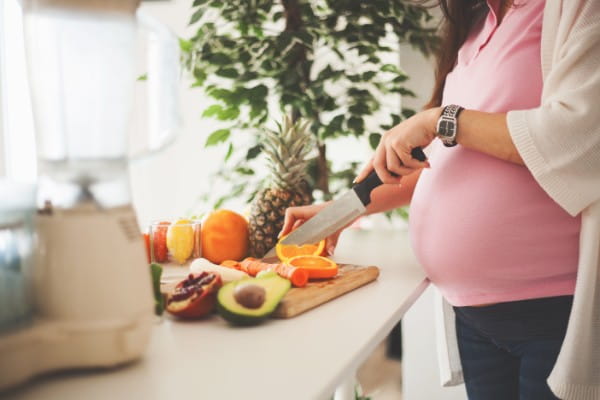
- Fruits & Vegetables: Fruits and vegetables provide vitamins and nutrients as well as fiber to ease digestion and prevent constipation (leafy greens, broccoli, carrots, apples, oranges, grapes)
Avoid:
- High mercury fish (shark, swordfish, king mackerel, tilefish)
- Raw or undercooked meats, fish or eggs
- Deli meats
- Unpasteurized milk or cheese
- Alcohol
- Sugary drinks & highly processed foods or snacks that add empty calories.
- Limit caffeine to less than 200 mg per day (approximately a 12 oz. cup of coffee)
Morning Sickness
Morning sickness can be an issue during pregnancy, but many women find these tricks can help. If the morning sickness is severe, be sure to talk to your doctor.
- Keeping something in your stomach. Start by eating a bland cracker or piece of bread as soon as you wake up.
- Stay hydrated. Water is best, but some women find ginger-ale helpful in quelling the nausea.
- Steer clear of foods with strong odors
- Select bland foods and limit spices if they upset your stomach
- Avoid greasy foods
Nutrition During Postpartum Period
After delivery, your body needs good nutrition to heal, regain strength and support your energy. Eating balanced, nutrient-rich food helps your body repair tissues, restore blood levels and fight fatigue.
If you are breastfeeding, your body needs extra calories and nutrients to produce milk, which means your diet becomes even more important for you and your baby.
Don’t think of it as a postpartum “diet.” Instead, think of your food as fueling your recovery. The right foods will help you heal, regain strength and support long term health while caring for your newborn.
Eat More of These Postpartum:
- Lean proteins (chicken, turkey, fish, eggs, beans, tofu)
- Whole grains (brown rice, whole-wheat pasta, whole-grain bread, oats_
- Calcium-rich foods or fortified alternatives (milk, yogurt, cheese)
- Fruits & Vegetables for vitamins, nutrients and fiber
- Health fats for energy (avocados, nuts, seeds, healthy oils)
Avoid or Limit These Postpartum:
- Empty calories (sugary drinks, sweets, processed snacks)
- Fried and high-fat foods (burgers, fries, bacon)
- Alcohol (avoid if breastfeeding, delay until your doctor clears you if not breastfeeding)
- Too much caffeine (limit to 1 cup per day if breastfeeding)
Not Breastfeeding? Focus on Healing and Balance:
- No additional calories are needed, but nutrient-dense foods are still essential for recovery
- Iron-rich foods help restore blood lost during delivery (lean red meat, leafy greens, beans)
- Fruits, vegetables & whole grains support energy and digestion
- Staying active and eating balanced meals helps the body gradually return to a healthy weight
Breastfeeding adds Higher Nutritional Demand:
- Additional Calories: Most moms need an additional 400-500 calories per day. Aim for nutrient-dense calories, not empty calories from sugary drinks or processed snacks.
- Protein: Protein-rich foods support milk production and tissue healing. (lean meat, eggs, beans, lentils)
- Calcium, Vitamin D, Iodine, Choline and Omega-3s: These all pass into breast milk and help your baby’s brain and bones develop
- Extra Fluids: It is important to stay hydrated for milk supply. Extra fluid (mainly water) is important for both you and baby.
Podcast Episodes
Women's Health
Learn More

Healthy YOU Podcast: Taking Charge of Your Postpartum Health
August 28, 2024
Women's Health
Podcast Episodes
Learn More

Healthy YOU Podcast: Planning for Pregnancy, Pre-pregnancy health
April 06, 2023