

Have you been waking up with wrist pain, tingling fingers or stiffness in your hands and wondering whether it is Carpal Tunnel Syndrome or Hand Arthritis? The two conditions often get confused, but they have different causes and finding the right diagnosis matters a lot.
“Many patients believe they have carpal tunnel when what they’re really facing is arthritis in the hand or wrist joints,” shares James C. Kyriakedes, M.D., a Riverside subspecialized hand and wrist surgeon. “Recognizing the differences early helps us choose the right treatment and get people back to normal activity.”
Let’s walk through a few things like what hand arthritis is, how carpal tunnel works, how to spot the differences, whether you could have both and what your treatment options might look like.
What Exactly Is Hand Arthritis?
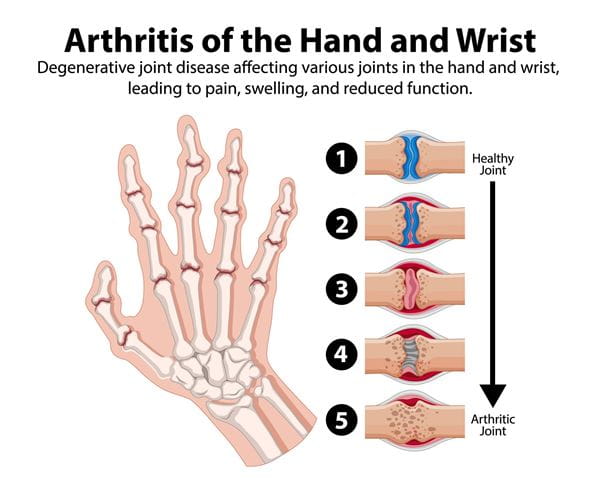
Hand arthritis happens when the smooth cartilage that cushions the bones in your finger, thumb or wrist joints gradually wears down. Without that cushion, bones can rub together, causing pain, swelling, stiffness and reduced motion. The most common variety is osteoarthritis, the “wear-and-tear” kind, though other types such as rheumatoid arthritis or post-traumatic arthritis (after an injury) can also affect the hands.
Some common signs of hand arthritis include aching joint pain that gets worse after use, stiffness (especially after resting), joint swelling or tenderness, limited grip strength and sometimes a grinding or clicking when you move your fingers. You might even notice bumpy or knobby changes near finger joints.
“Arthritis in the hand often develops gradually,” explains Dr. Kyriakedes. “You may feel stiffness when you first wake up or after you’ve been resting, and over time the pain creeps in more often.”
Because arthritis is a joint problem, rather than a nerve problem, it usually centers on the joints themselves rather than electrical or tingling sensations – though it can indirectly affect nerves.
How Carpal Tunnel Syndrome Works
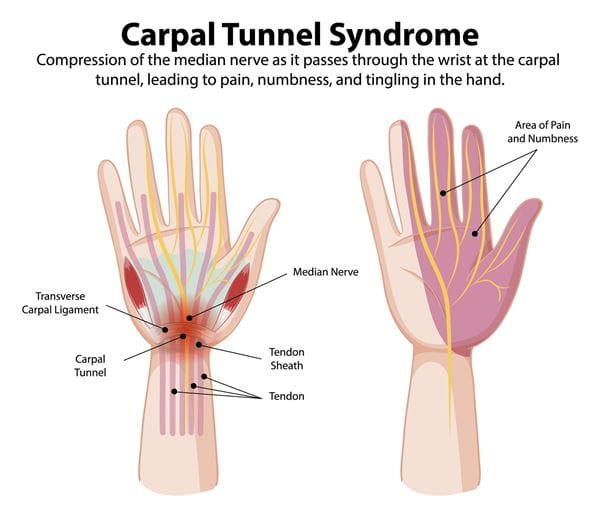
Carpal tunnel syndrome hits when the median nerve gets squeezed as it passes through a narrow tunnel in the wrist called the carpal tunnel. That nerve controls feeling and movement in your thumb and some of your fingers. When the tunnel becomes too tight, or the tissues inside swell, the nerve gets compressed.
People with carpal tunnel often report tingling, burning or numbness in their thumb, index and middle fingers. The pain may wake you at night. You may also notice weakness in your hand, dropping things or difficulty with tasks like gripping. And while there may be pain, visible joint swelling or deformity is usually not part of the picture.
Because this is a nerve problem rather than a joint problem, the approach to treatment often differs from what you’d do for arthritis.
Hand Arthritis vs Carpal Tunnel Syndrome: How to Spot the Difference
Since both conditions affect your hands and can cause discomfort, it can be tricky to tell what you’re dealing with. Here are some key clues:
- Where you feel it: With hand arthritis you’ll feel it in the finger joints, thumb base or the wrist joint itself. With carpal tunnel you’ll more often feel tingling or numbness in the thumb, index, middle fingers and sometimes the ring finger, especially along the nerve path from the wrist.
- Type of sensation: Arthritis tends to hurt in a deep ache, stiffness or soreness in the joints. Carpal tunnel tends to tingle, burn, go numb or feel like electric shocks.
- When it happens: Arthritis pain might flare after overuse or after sitting still, morning stiffness is common. Carpal tunnel symptoms often creep in at night or when the wrist is bent or used repetitively.
- Appearance: With arthritis you may notice swelling or visible joint changes or bumps. With carpal tunnel you often don’t see joint deformity, because the issue is nerve-compression rather than joint wear.
- Nerve involvement: If you have clear numbness or weakness in the fingers, dropping items or wake up with your hand asleep, it leans more toward carpal tunnel. If your grip is weak because of joint pain but you do not have numbness, arthritis is more likely.
If you’re still unsure, a hand and wrist specialist can perform an exam, including physical tests, imaging (X-ray) or nerve studies, to determine whether you’re dealing with arthritis, carpal tunnel or both.
Can You Have Both Hand Arthritis and Carpal Tunnel at the Same Time?
Yes, you absolutely can. In fact, it happens more often than you might think. While joint inflammation and joint wear-and-tear (osteoarthritis) can cause visual changes to the joints, aching of the joints and decreased finger range of motion, this can be experienced in a more painful or numb way when carpal tunnel syndrome is present. That means while osteoarthritis does not lead directly to carpal tunnel symptoms, both conditions can arise independently but co-exist.
"On the other hand, inflammatory forms of arthritis like rheumatoid arthritis and psoriatic arthritis can have much higher levels of inflammation also in the carpal tunnel," notes Dr. Kyriakedes. "The lining of the tunnel and the tendons within the carpal tunnel thicken in these conditions, which directly contributes to those patients also developing carpal tunnel syndrome. Treating only one without recognizing the other can cause further progression over time.”
So, if you’re experiencing a mix of joint pain, stiffness, tingling and numbness, it is wise to get evaluated for both conditions.
Treatment of Hand Arthritis and Carpal Tunnel: What Works
Let’s talk options. The good news is, for both hand arthritis and carpal tunnel there are non-surgical and surgical treatments, but the first goal is always to relieve symptoms, restore function and prevent further damage.
Non-Surgical Options
Hand arthritis
- Modify activities to avoid repetitive stress on the thumb base or finger joints.
- Use thumb braces or finger supports to stabilize painful joints.
- Take over-the-counter anti-inflammatory medications after checking with your provider.
- Consider corticosteroid injections into the joint to help address flare-ups.
- Use warmth to ease stiffness and cold packs to reduce swelling.
Carpal tunnel syndrome
- Wear a wrist splint especially at night to keep the wrist in a neutral position.
- Reduce repetitive wrist movements and take frequent breaks.
- Hand stretches to maintain flexibility may decrease symptoms.
- Use anti-inflammatories or get a steroid injection if swelling is the issue.
- Adjust ergonomic factors at work and home – such as the keyboard height and wrist position.
Both conditions benefit from early intervention. The sooner you start, the better the chances of avoiding surgery and preserving hand function.
Surgical Options
For hand arthritis
If joint damage is advanced and conservative measures are not enough, surgery may be recommended. This might include:
- Joint fusion (eliminating movement in a very damaged joint to stop pain)
- Joint replacement (artificial joint to restore motion)
- Reconstruction of bone or soft tissue around severely affected joints
For carpal tunnel syndrome
When symptoms persist despite non-surgical care, or if nerve damage is starting, surgery may be the best next step. Typically, this involves releasing the ligament that forms the roof of the carpal tunnel, giving the median nerve more space and reducing pressure to provide relief from the tingling and numbness.
Tips for Keeping Your Hands Healthy
No matter what condition you’re dealing with, here are some daily habits that support healthy hand joints and nerves:
- Stretch your fingers and wrists several times a day.
- Use jar openers, padded grips and ergonomic tools to reduce stress on joints.
- Maintain a healthy weight to ease joint load.
- Take frequent breaks from repetitive tasks and alternate hands when possible.
- At night, check your wrist position and avoid prolonged wrist flexion or pressure.
- If you notice persistent pain, stiffness, numbness or weakness in your hands or fingers, don’t wait to have a hand and wrist specialist evaluate you.
Next Steps
The cause of your hand pain may not always be what you expect. What may feel like carpal tunnel syndrome could actually be hand arthritis. And in some cases, you could be facing both conditions at once. Knowing the difference between the two and how it affects your function is a great first step toward successful treatment.
At Riverside, we offer advanced imaging, non-operative treatment options and minimally invasive surgical treatments for all types of hand and wrist conditions. Whether you’re recovering from an injury or managing a chronic disorder, we’re here to help you return to the activities you love.
Schedule an appointment online for your hand or wrist evaluation or call 757-534-9988 to schedule an appointment with an orthopedic specialist.