
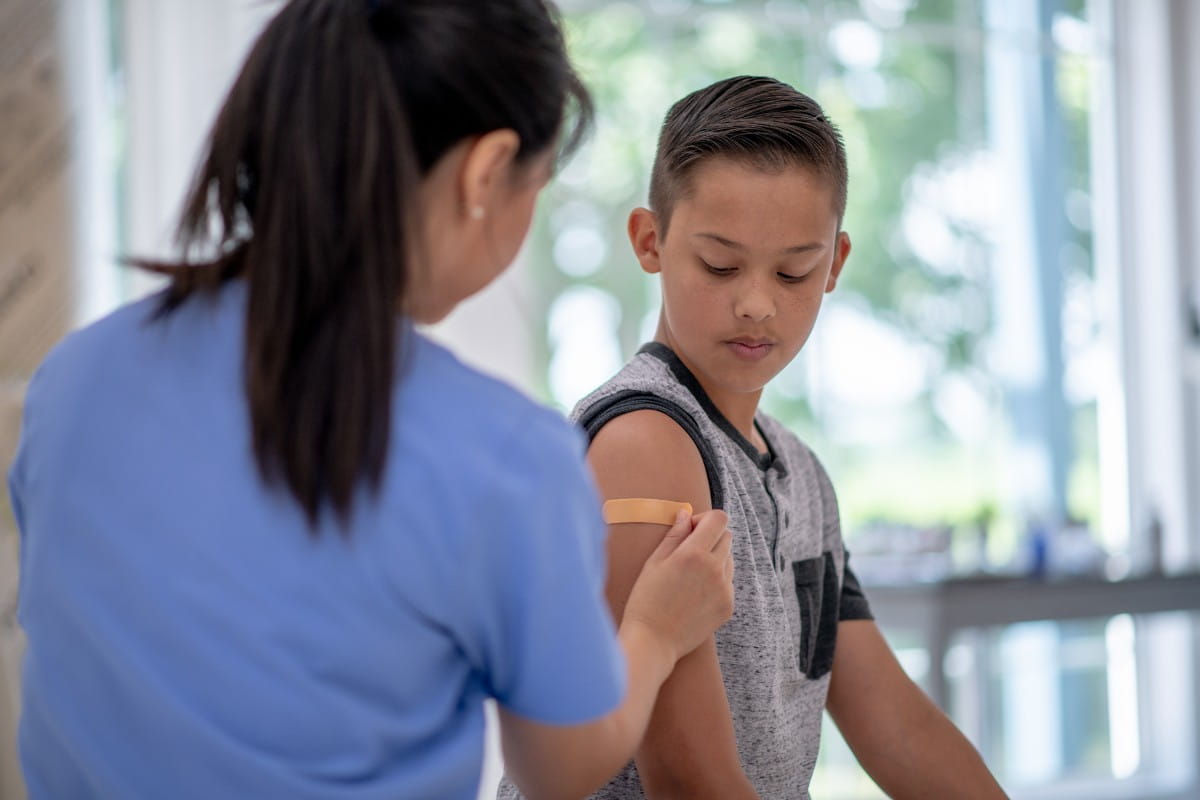
As a parent, you want to do all you can to protect your kids and keep them safe. And one of the most important ways to protect them when they are very young is to make sure, they get all their recommended vaccinations.
As your children become preteens, they will need an additional vaccination to protect them from certain cancers when they are adults. They can do this by receiving the HPV vaccine.
Children are not the only ones eligible to receive the HPV vaccine. People can become exposed to HPV at various times throughout their life, so the Centers for Disease Control (CDC) has expanded coverage to include adults up to 45 years of age.
According to the CDC, all preteens should start getting the HPV vaccine as early as nine years of age to protect them from certain cancers later in life. Every year in the U.S., HPV is estimated to cause nearly 37,000 cases of cancer in men and women.
"Ideally, we recommend vaccinating your children before they are exposed to the HPV virus," says Alexandria Garlow, PA-C, a physician assistant at Riverside Partners in Women’s Health. “HPV is a contagious virus that can be spread with skin-to-skin contact, or during sex. Receiving the vaccination earlier in life gives improved prevention to that virus becoming a long-term issue. However, it is strongly encouraged for any person who is eligible."
What is HPV?
HPV stands for Human Papillomavirus, and it's the most common sexually transmitted viral infection. HPV is a group of viruses that can spread from one person to another by direct skin-to-skin contact and during sexual activity.
HPV itself is not cancer, but having persistence of the virus can cause certain cancers to develop such as cervical, anogenital, vulvar, and certain head and neck cancers. There are more than 100 types of HPV viruses, some of which are considered high-risk types that can lead to cell changes that, over the years, may develop into cancer.
How do you get HPV?
The HPV virus is attracted to specific cells found on the skin's surface and in areas of the body that are moist. When a person is exposed to the virus through sexual activity, the virus enters the body, usually through an abrasion, cut, or tear in the skin.
HPV can affect the male and female genitals and reproductive organs. It can also live in the back of the throat, tongue, or tonsils. It is important to note that HPV is the leading cause of cervical cancer among women.
Most HPV infections don't lead to cancer. And most viruses go away on their own within two years of exposure. But sometimes, HPV infections linger and can eventually lead to cancer.
What are the symptoms and risk factors?
Some strains of HPV cause warts, but these typically are not the strains that are known to cause cancer. Most people with HPV will never have any signs or symptoms until it has already caused serious health issues. This is why it is recommended to be examined by your OB/GYN and get your pap smear as directed by your provider.
According to the CDC, in the U.S., about 80 million people are currently infected with HPV, and about 14 million people get a new HPV infection every year.
Risk factors for HPV include:
- Number of sexual partners
- Compromised immune system
- Damaged skin or skin issues
- Personal contact
What are possible vaccine side effects?
Any vaccine can cause side effects. Most people who get the HPV vaccine have reported no side effects except a sore arm from the shot. And for those who do experience side effects, they are very mild. The most common side effects include:
- Pain, redness, or swelling at the injection site
- Headache
- Fever
- Nausea
- Muscle or joint pain
Is the vaccine safe and effective?
The HPV vaccine is safe, effective, and provides long-lasting protection. All vaccines in the U.S. go through extensive testing and clinical trials before they are approved by the Food and Drug Administration (FDA). And according to research, the benefits of getting the HPV vaccine far outweigh the potential risks.
"The HPV vaccine is extremely effective," says Ms. Garlow. "It can prevent more than 90% of cancers caused by the HPV virus. Since the HPV vaccine became available in 2006, we have seen a significant reduction in HPV infections and cervical cancer cases."
Available vaccines and dosage
Three vaccines are currently available that are approved by the FDA, and they can be administered to boys and girls. They include Gardasil 4, Gardasil 9, and Cervarix. The CDC recommends that children 9-14 years olds should receive two doses at least five months apart. People ages 15 years or older at initial vaccination will need the three-dose series.
HPV is the most common sexually transmitted disease today. Most people who are sexually active get HPV disease at some point in their lives and don't even know if they ever had it. And while most HPV viruses go away on their own, the best course of action is to ensure preteens and eligible adults get the vaccine to protect them from cancer.
Talk to your primary care provider to discuss the best vaccine and course of action for your family.
Riverside Health is committed to providing world-class care to women and men of all ages. If your child or teen has not been vaccinated from HPV, please make an appointment with one of our primary care or women’s health providers.
Learn more about cancer prevention by visiting riversideonline.com/preventcancer.