More health care professionals are writing prescriptions for exercise. The reason? Movement is medicine. Exercise benefits nearly every aspect of the human mind and body. It improves mood, boosts immune function and builds muscle.
“Some people enjoy exercise and others dread it, imagining endless hours on a treadmill. But exercise doesn’t have to be a chore. Finding activities that you enjoy is the key to developing lifelong exercise habits that prevent disease,” says a Riverside provider.
The risks of obesity
A few extra pounds may not seem like a big deal. But, when extra weight puts you in the category of overweight or obese, the risks are more than not fitting into your jeans.
Obesity is classified as a body mass index of 30 or more. BMI takes into account your weight relative to your height. Research shows that obesity:
- May shorten life expectancy by up to eight years in adults aged 20-39 with a BMI > 30
- Increases the risk for other chronic medical conditions, such as coronary artery disease, type 2 diabetes and sleep apnea
- May affect how well some medications work
The power of exercise
Need some motivation to get moving? The laundry list of health benefits, widely supported by research, may help:
- Improves mood. Exercise promotes the release of compounds that help you feel happy and relaxed.
- Helps to maintain a healthy body weight.
- Improves digestion through stimulating motility (movement) of the digestive tract.
- Reduces blood sugar. Exercise uses blood sugar to fuel muscles.
- Strengthens muscles and bones. As you exercise, muscles and bones are remodeled to withstand the stress of the exercise.
- Prevents heart disease. Exercise improves circulation and strengthens the heart (a muscle). Regular exercise also lowers fats in the blood like triglycerides and cholesterol. Exercise uses fat to fuel muscles during exercise.
- May improve cognitive functioning and protect against Alzheimer’s disease. Exercise improves circulation to the brain and seems to slow changes that impact memory.
- Reduces the risk of some types of cancer.
- Decreases the risk of falls by improving strength, coordination and balance.
How much exercise do I need?
Some exercise is always better than none. “To maximize the health benefit you’ll want to aim for 150 minutes per week of moderate-intensity exercise like jogging or biking, or 75 minutes of intense exercise like sprinting or a fast-paced aerobics class,” says a Riverside provider.
In addition to heart-pumping exercise, you should get in strength training twice a week. This includes exercise like lifting weights or using resistance bands.
Do something you enjoy
Exercise doesn’t always mean running or going to the gym to lift weights. Any activity that gets your heart rate up or involves resistance can count toward your exercise goal.
If you prefer activities that accomplish a task, consider yardwork, shoveling snow or completing house projects.
Or maybe you enjoy nature. If this sounds like you, take a walk or jog in a scenic location like a park or nature preserve.
When in doubt, ask for help
Finally, whatever form of exercise you decide to undertake, it’s always a good idea to check with your primary care provider first, or, if you need a provider, make an appointment at riversideonline.com
Resources:
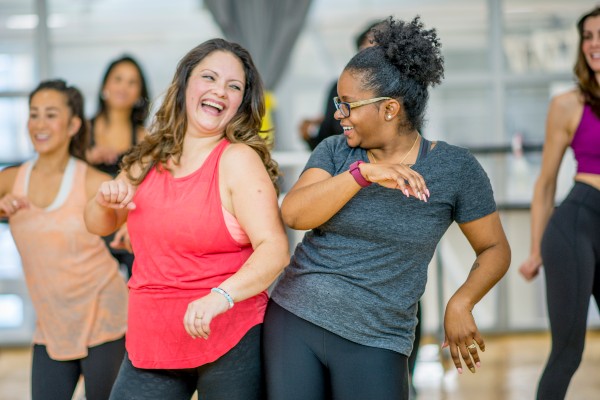
- Exercising in a group is a way to merge social interaction with activity and adds a layer of accountability. Group fitness classes are a great way to try something new and meet new friends.
- Need help reaching your exercise goals in 2020? Our experts can help.