
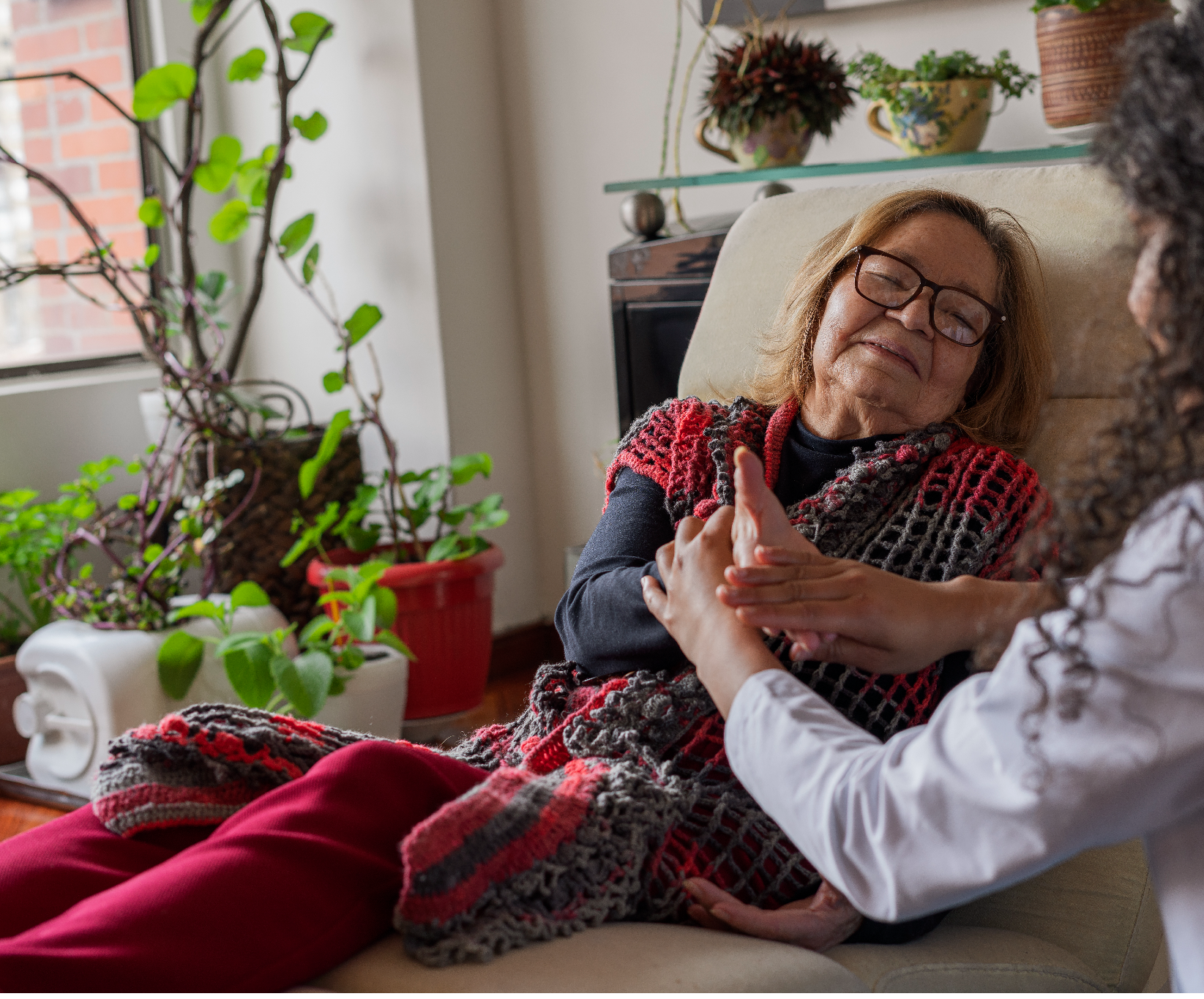
Part of the series: Understanding Hospice Care: A Guide for Patients and Families
Riverside’s Hospice Education Series on comfort, quality of life and compassionate care.
Comfort doesn’t always come from traditional medical care alone.
Sometimes, it comes from connection, relaxation or engaging the senses in a different way.
Hospice care recognizes this by offering alternative therapies that support comfort from a broader perspective.
A Different Approach to Comfort
Alternative therapies focus on improving comfort in ways that go beyond medication.
These approaches may help:
- Reduce anxiety and restlessness
- Create moments of calm and relaxation
- Reconnect patients with meaningful experiences
For example, some programs use immersive or sensory experiences to help patients feel present and at ease—even if they can no longer travel or engage as they once did.
Creating New Paths for Connection
As illness progresses, communication and engagement can become more difficult.
Alternative therapies offer new ways to connect—especially for individuals experiencing cognitive or sensory changes.
These therapies can help patients feel:
- Grounded
- Reassured
- More connected to their surroundings
Moments That Matter
These approaches often create simple but powerful moments:
- A sense of peace
- A memory brought into focus
- A feeling of calm and presence
For families, these moments can be especially meaningful—offering reassurance and connection in small but important ways.
Care That Meets People Where They Are
Hospice care recognizes that not every need is physical—and not every solution is clinical.
Alternative therapies reflect a more complete view of care, helping bring comfort in ways that are personal, thoughtful and deeply human.
Hospice is good medicine
Not because it cures disease—but because it brings together everything needed to support comfort, dignity and quality of life.
To learn more about hospice services and support, learn more about Riverside Hospice Care.