One husband’s promise to his high school sweetheart will become a home for families at the end of life.
There was a knock at the door.
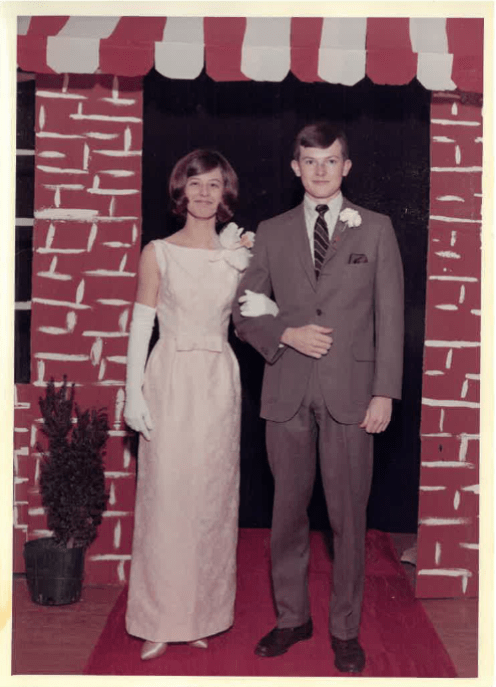
Jim Thornton was a teenager then, home and heartbroken in Alabama. He and Donna—the girl who had captivated him—had gotten into what he calls a “lover’s spat.” Their parents had forbidden them from seeing one another. Donna had even begun dating someone else.
Then Donna happened to see Jim’s mother and asked why he wasn’t at school.
Jim was sick, his mother told her.
Not long afterward, someone knocked on his door.
Jim opened it.
Donna was standing there, smiling, holding a bowl of homemade soup.
More than six decades later, Jim still remembers the moment. It was, he says, like seeing an angel.
“I will remember that as a moment I will never, ever forget. It was like the opening of the rest of our life together.”
And in many ways, it was.
Jim and Donna Thornton were married for nearly 56 years. Together they built a life that took them from Alabama to Texas, to Raleigh and eventually to Virginia. They raised their daughter, Ragan. They built careers at the shipyard. They became grandparents. They worshipped and served together.
And somewhere along the way, Donna asked Jim to make her a promise. Neither of them could have known then just how much that promise would one day mean.
“I would really like to stay at home.”
Service was woven into their life together. They were active in their church and spent time visiting residents of a local senior living community, singing songs, sharing devotionals and enjoying simple fellowship over cupcakes and ice cream. After one of those visits, Donna and Jim were driving home. Donna had begun noticing some changes in herself. She told Jim that if something happened to her—if her health or her mind declined—there was something she wanted him to know. She wanted to stay home.
Jim’s response was simple, “Okay.” That was it.
A request. A promise. And years later, when Alzheimer’s disease progressed and Donna became increasingly dependent on others for her care, Jim remembered.
The circumstances weren't easy, but the decision was.
“It wasn’t hard,” Jim says. “It was easy for me because I knew that’s what she wanted.” He cared for Donna at home. And eventually, Riverside’s palliative care and hospice teams helped him do it.
From fear to gratitude
Jim remembers how he felt when hospice first entered the conversation.
“I thought hospice was a dirty word,” he says.
It frightened him.
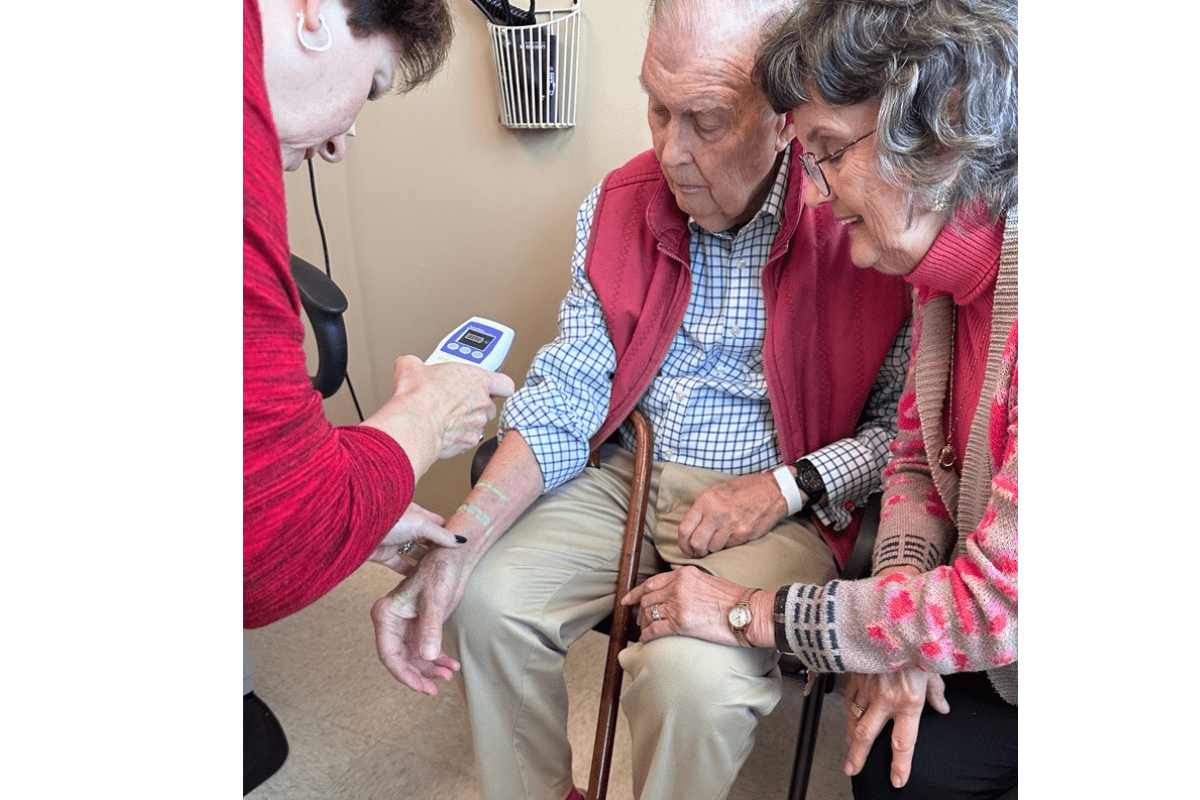
Donna initially received palliative care before transitioning to hospice. Over time, Jim came to know the team members who entered their home not simply as clinicians, but as people willing to accompany a family through one of the most difficult experiences of their lives.
“They have the hardest job in the world,” he says. “They know what the end point is.”
Still, they came, they provided care, they answered questions, they taught him—and they helped Jim care for Donna in the place she had asked to remain.
Today, when Jim hears that someone is afraid of hospice, he tells them what experience taught him:
“Embrace it, not be afraid of it.”
The care provided comfort for Donna, but it also cared for the caregiver.
After nearly 56 years of marriage, when Jim lost the person he had loved since they were teenagers, that experience stayed with him and so did something else—Donna’s instinct to help.
"You're given things to give things."
When Donna’s disease had progressed, she was sleeping in a hospital bed in a room adjacent to Jim’s. At this time Donna could no longer walk, talk or care for herself. Jim knew that he was witnessing the final decline of the love of his life.
One morning, Jim came into Donna’s room and she was smiling. According to him, it was a smile he would remember for the rest of his life. Donna, he said, never smiled again. With that smile, Donna closed the final chapter of the life she and Jim built together. A love story that had begun nearly 56 years earlier with a smile he never forgot.
After Donna passed away, Jim began asking questions. What do hospice teams need? What could make things better? How could he help?
The care his family received stayed with him. So did his gratitude.
Jim and Donna had worked hard throughout their lives. Donna had a career at the shipyard, working with engineers before retiring when their first grandchild arrived. Jim worked in environmental health and safety at the shipyard, spending 40 years there from 1976 to 2016. “We’ve been blessed,” Jim says. “And so, I think it’s important to give back.” Then he puts the philosophy behind the gift into a sentence: “I think you’re given things to give things.”
Jim began talking with Riverside about what was missing and one need stood out. Not every person receiving hospice care can remain in their own residence. Sometimes the medical needs are too great, sometimes the family caregiver is elderly or overwhelmed, or sometimes the circumstances simply make staying home impossible.
Jim had been able to keep his promise to Donna. He began thinking about the families who couldn’t. What if there were another option? Not a hospital, not an institution, a home.
The Donna S. Thornton Hospice Home
Through a seven-figure gift to Riverside, Jim is helping make that home possible.
The Donna S. Thornton Hospice Home will be located on the campus of Warwick Forest, a Riverside Senior Living Community in Newport News. The intimate, four-room hospice home will provide a dedicated setting for people approaching the end of life when receiving hospice care in their own residence is no longer possible, but the number of rooms is almost secondary to what Jim wants people to feel inside them.
Home. Jim is particular about that word.
“We want it to be known as a home,” he says. “Not a house, not an office, not a facility.” “It needs to feel like home.”
That means creating a place where a person can be comfortable and a family can be together. Where loved ones can step out of the role of full-time caregiver and return, as much as possible, to simply being a spouse, child, sibling or friend. Jim imagines families knowing their loved one is comfortable and cared for. A place, he says, where someone can “transition peacefully.” It is the experience Donna wanted and now it will bear her name.
What would Donna think?
Jim doesn’t hesitate when asked.
She would think it was “marvelous.”
He remembers conversations they had about giving during their lifetime. Donna believed that if they were going to help people, they should do it while they were alive so they could see the good that came from it. Jim wishes she could be here to see this. But he believes she does.
“I know she can see it,” he says. And would she approve? “I’m 100...1,000% sure of that.”
Perhaps that’s because the home represents philanthropy at its best: a reflection of how Donna moved through the world—kind, loving, always thinking about other people before herself.
The girl who noticed someone was missing.
The girl who showed up at his door, with a smile.
The woman who served alongside her husband.
The wife who trusted him with one of her most important wishes.
And now, the woman whose name will welcome other families through a door at one of the most vulnerable moments of their lives.
A promise that became bigger
Jim Thornton kept his promise to Donna. She stayed home. Now, because of their story, four families at a time will have another kind of home when staying in their own residence isn’t possible. Those families may never know Jim, they never had the chance to know Donna—but they will know something about her, they will know her name. And they will experience the legacy of a woman Jim says spent her life caring and giving to others.
There is a beautiful symmetry in that.
Many years ago, when Jim needed someone, Donna showed up at his door. Now there will be another door, above it will be her name and behind it, people will be waiting to care for someone else, with a smile.