
Robotic Surgery
For more than 20 years, Riverside Health has specialized in robotic-assisted surgery, pairing exceptional surgical skill with the latest robotic technological advancements.
Since launching our comprehensive robotic surgery program in 2005, we’ve completed more than 6000 robotic-assisted procedures, helping our patients experience surgeries with greater precision and faster recoveries.
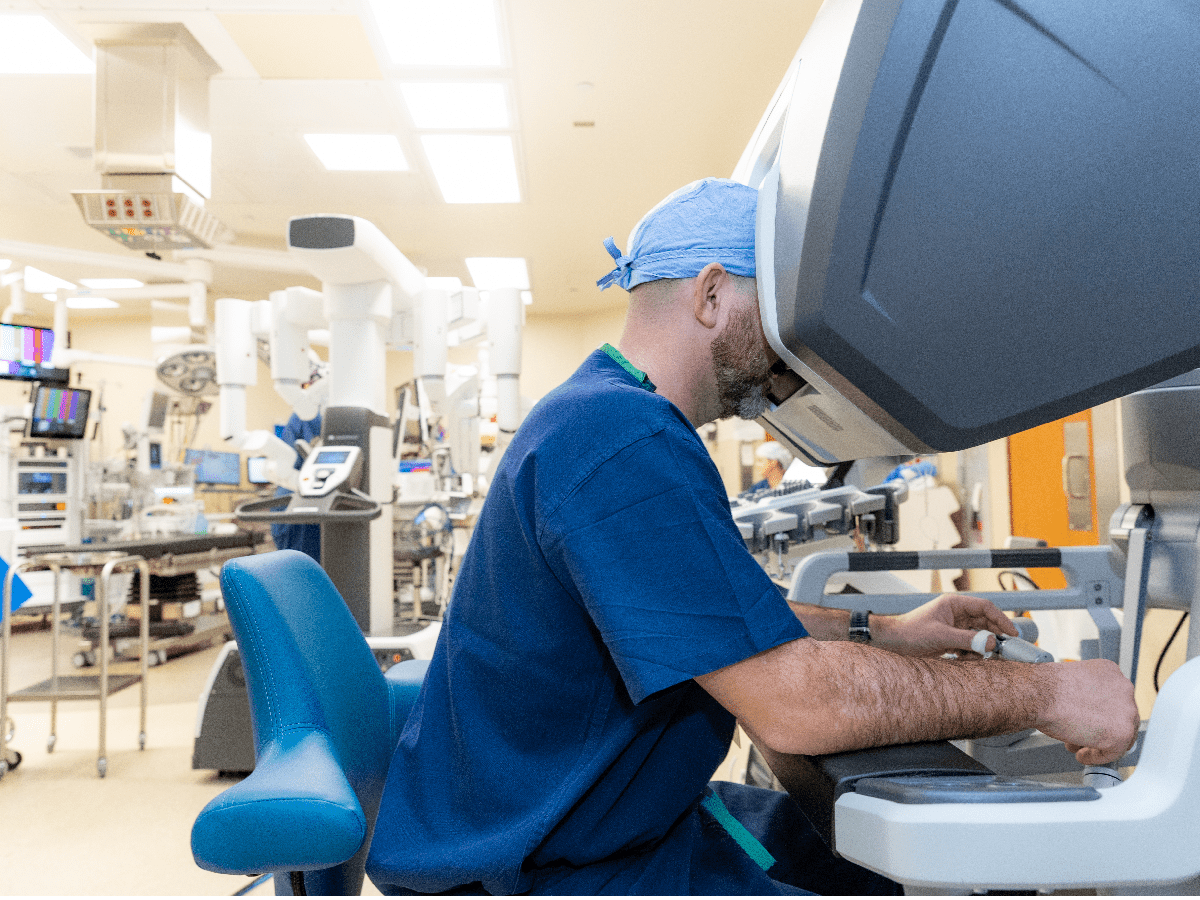
- Meaningful benefits: Robotic-asssited surgery allows for greater precision and control, often resulting in less pain, shorter hospital stays and faster recovery.
- Robotic expertise across multiple specialties: Our robotic surgery program spans a wide range of procedural and surgical specialties where delicate, complex or cancer-related surgeries may be needed.
- Board-certified surgeons with robotic surgery training: Every robotic-assisted surgery is performed by a highly skilled surgeon with specialized training and extensive expertise in robotic-assisted techniques.
- A health system at the forefront of innovation: Riverside Health continues to invest in leading-edge surgical technology.
- Expanded capabilities for complex care: Robotic surgical technology enables surgeons and proceduralists to perform intricate procedures that may be more difficult, invasive or not have been possible with traditional surgical methods.
Robotic surgery is a sophisticated technology that gives your physician real-time, high-definition three-dimensional visualization magnified 10 times larger than the human eye and a 360-degree range of motion, greater than the human wrist.
The precision that can be achieved for even the most delicate and complex cases through robotic-assisted surgery presents many benefits, to include:
- Less pain and discomfort during recovery
- Enhanced surgical precision
- Risk of infection is low
- May be performed outpatient or with shorter inpatient hospital stays
- Smaller incisions and minimized scarring
- An overall improved surgical and recovery experience
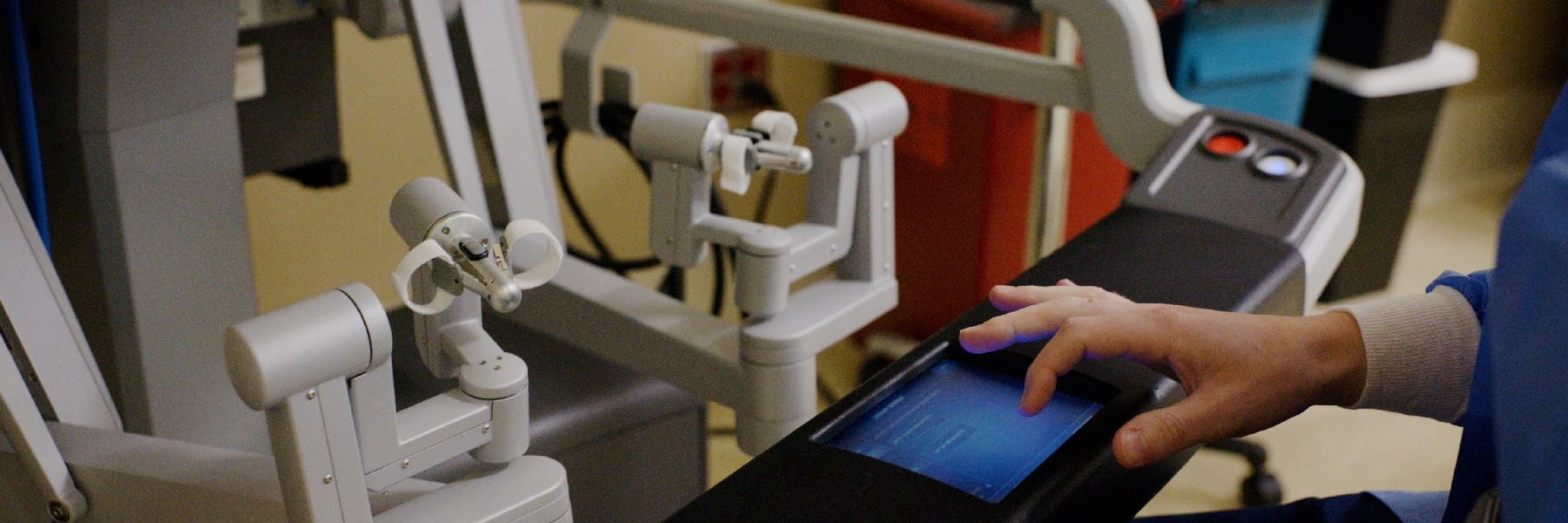
Does the robot perform my surgery?
Your surgeon or proceduralist remains in full control throughout your procedure, operating from a console in the room. The robot provides a magnified view of the surgical site and translates your surgeon’s or proceduralist’s precise hand movements into controlled, highly accurate actions using advanced instruments.
In addition, you’ll have a specialized team of anesthesiologists, OR nurses, certified surgical first assistants and certified surgical technologists supporting you throughout your surgery.
Riverside Health’s robotic program is supported by highly trained surgeons and proceduralists across multiple medical specialties, bringing our community tremendous experience and advanced treatment for a wide range of conditions.
Our urology surgeons have extensive experience using robotic-assisted surgery to care for patients with a wide range of urologic conditions, including cancer and complex pelvic concerns. Robotic technology is especially valuable in urologic surgery, where protecting delicate nerves is critical. This precision can help improve outcomes related to urinary control and can help to preserve sexual function.
Robotic-assisted urologic surgical procedures performed with Intuitive’s daVinci robot include:
- Robotic prostatectomy
- Robotic nephrectomy or partial nephrectomy
- Cystectomy (bladder surgery)
- Pyeloplasty surgery for kidney blockage
- Ureteral implantation
- Large bladder stones
In addition, Riverside offers Aquablation therapy using the HYDROS Robotic System for the treatment of benign prostatic hyperplasia (BPH), commonly known as an enlarged prostate. Aquablation therapy is a minimally invasive treatment option, clinically proven to relieve urinary symptoms while preserving sexual function and continence.
Aquablation therapy uses a heat-free, robotically controlled waterjet guided by real-time ultrasound imaging. This allows your surgeon to create a personalized treatment plan based on each patient’s anatomy, precisely targeting the tissue causing symptoms while protecting surrounding structures.
Our thoracic surgeons are at the leading-edge of minimally invasive lung surgery, utilizing robotics to access the thoracic cavity without having to break through the rib cage. Examples of procedures and conditions where robotic-assisted surgery may be used include:
- Robotic lobectomy
- Robotic surgery for lung cancer treatment
- Single anesthesia bronchoscopy and resection (SABR)
Our fellowship trained, board certified gynecologic oncologists specialize in treating cancers of the female reproductive organs as well as managing complex non-cancerous gynecologic conditions. Robotic-assisted surgery may be used in gynecologic cancer surgery, allowing enhanced precision, and minimizing impact to surrounding tissue.
Examples of procedures and conditions where robotic-assisted surgery may be used include:
- Robotic complete hysterectomy, including large fibroids
- Robotic removal of fallopian tubes and ovaries, including large ovarian cysts
- Robotic endometrial cancer staging
- Robotic ovarian cancer staging, including omentectomy
- Robotic pelvic and para-aortic lymph node dissection for the management of a variety of gynecologic cancers
- Robotic risk-reducing hysterectomy and salpingo-oophorectomy for high-risk genetic conditions
- Robotic surgery to address recurrent gynecologic cancer
- Robotic sacral colpopexy for uterovaginal prolapse
- Robotic endometriosis surgery
- Robotic myomectomy
Our urogynecologist uses robotic-assisted surgery to treat pelvic floor conditions with a focus on restoring function and improving quality of life.
Robotic-assisted procedures include:
- Robotic-assisted uterine suspension and robotic-assisted sacrocolpoplexy, to correct pelvic organ prolapse
- Robotic-assisted hysterectomies
Our experienced gynecologists are specially trained to perform robotic-assisted gynecologic surgery. Robotic technology may allow conditions to be treated while protecting fertility. Examples of procedures and conditions where robotic-assisted surgery may be used include:
- Robotic complete hysterectomy
- Robotic myomectomy
- Robotic endometriosis surgery
- Pelvic organ prolapse
- Benign ovarian procedures
- Vaginal natural orifice surgery (VNOTEs) for primary uterovaginal prolapse
Colorectal surgery may be performed with a robotic-assisted approach to fix the concern surgically, restore function while minimizing the need for colostomy bags.
Robotic-assisted surgery may be used to surgically treat all types of hernias, to include:
- Inguinal hernias
- Umbilical hernias
- Incisional hernias
- Femoral hernias
- Hiatal hernias
- Ventral hernias
Riverside utilizes Intuitive’s ION robotic-assisted navigational bronchoscopy to allow pre-procedure planning, enhanced visibility or the airways and smooth navigation, allowing our pulmonologist to access deep into the lungs. While undergoing this bronchoscopy, it can be used to collect tissue samples (biopsies). In some cases, patients may have a bronchoscopy and robot-assisted lung resection under the same anesthesia episode (SABR).

Individualized surgical plans
You will have dedicated time with your surgeon or proceduralist to talk through the inherent risks, benefits and alternatives of your surgery and if a robotic-assisted, minimally invasive or traditional open approach is recommended to be the most effective and safe for you.
Find a Doctor